


Large-Scale Food Fortification (LSFF) is one of the most scalable and cost-effective ways to address micronutrient deficiencies. By adding essential vitamins and minerals to widely consumed foods such as flour, rice, edible oils and salt, fortification can reach large populations without requiring major changes in consumer behaviour.
The impact is already significant. New modelling highlighted in a 2026 GAIN policy brief estimates that existing food fortification programs prevent approximately 7 billion nutrient gaps every year (1). Yet the analysis also reveals a major opportunity: better compliance with existing fortification standards could prevent billions more.
The message is clear: fortification standards only deliver their intended public health benefits when fortified foods consistently meet those standards.
The compliance gap
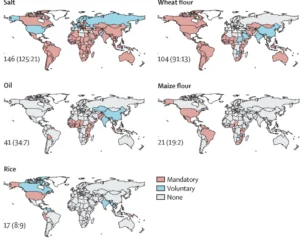
More than 150 countries require the fortification of at least one staple food (1). However, a mandatory standard does not automatically guarantee that every product on the market contains the required level of nutrients.
The analysis identifies poor compliance as one of the most immediate opportunities to increase the impact of existing programs. Food producers may face challenges such as inconsistent premix supply, technical limitations, inadequate equipment or limited capacity for routine quality control. At the same time, authorities may lack the resources or systems needed to monitor and enforce standards consistently.
This creates a gap between the fortification standard on paper and the nutrient concentration in the product reaching consumers.
Closing this gap requires more than regulation. It requires the ability to routinely measure, verify and act on fortification results.
The opportunity is significant
Current fortification programs prevent approximately 7 billion nutrient gaps annually. Iodine fortification alone is estimated to eliminate approximately 3.3 billion nutrient gaps across 139 countries, while iron fortification prevents inadequate iron intake for approximately 1.4 billion people (1).
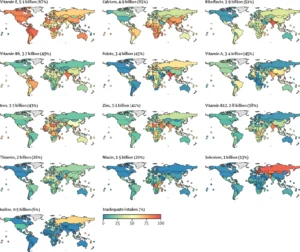
However, improving compliance with existing standards to 90% could prevent an additional 6.1 billion nutrient gaps annually. When stronger standards, improved compliance and expanded programs are combined, the model estimates that up to 24.7 billion inadequate nutrient intakes could be prevented annually (1).
The economic case is equally compelling: every USD 1 invested in fortification is estimated to generate USD 27 in health and productivity benefits (2).
The opportunity, therefore, is not only to fortify more foods. It is to ensure that existing programs consistently deliver what they are designed to deliver.
Making compliance measurable
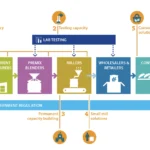
Improving compliance requires effective quality control and monitoring throughout the fortified-food supply chain.
For manufacturers, routine testing can help verify fortification processes, identify under- or over-fortification, detect deviations and support corrective action. For food control authorities, testing at border crossing points, production facilities and in the market can support faster decisions and more efficient compliance screening.
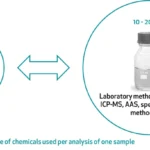
Traditional laboratory testing remains essential for reference analysis. However, it can be costly, time-consuming and dependent on specialised infrastructure, making frequent screening difficult.
This is where rapid, quantitative on-site testing can complement existing laboratory and regulatory systems.
Supporting compliance with iCheck
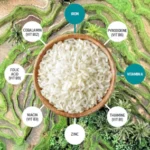
BioAnalyt’s iCheck provides portable solutions for measuring key vitamins and minerals in fortified foods and other nutritious products. Applications cover food categories including table salt, condiments, juices and beverages, fortified rice kernels, wheat and maize flour, maize and edible oils.

For food control authorities, iCheck can support screening across the supply chain from imported products at border crossings to production-line checks and market surveillance. This can help save time and resources, support more timely compliance decisions and contribute to a level playing field for producers and suppliers of fortified foods.
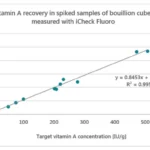
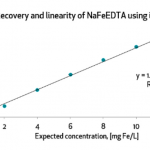
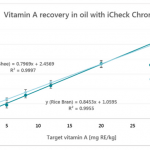
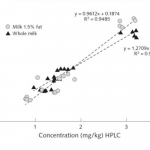
iCheck is designed to provide quantitative results in minutes using a portable, all-inclusive testing system. For specific applications, methods are validated through standardized assessment of precision, trueness and comparison with reference methods.
By making nutrient measurement more accessible, iCheck helps bring quality control closer to where decisions need to be made.
The next step for LSFF
The latest modelling evidence reinforces a fundamental point: food fortification works, but its impact depends on implementation.
Improving compliance with existing standards represents one of the fastest opportunities to increase the number of nutrient gaps prevented globally. Achieving this will require collaboration between governments, regulators, food producers, laboratories and technology providers.
For the food industry and food control authorities, the starting point is practical: measure, verify and act.
The future of LSFF will not be defined only by how many products are fortified, but by how consistently those products meet the standards intended to protect public health.
Better compliance begins with better visibility.
Source:
- Friesen, Valerie M., et al. “Impact of large-scale food fortification programmes on micronutrient inadequacies and their implementation costs: a modelling analysis.” The Lancet Global Health 14.5 (2026): e762-e771.
-
Global Alliance for Improved Nutrition (GAIN) / Future Fortified. Nourishing Progress: Three Years of Action on WHA76.19. Accelerating Efforts to Prevent Micronutrient Deficiencies and Their Consequences Through Safe and Effective Food Fortification. 2026.