


Food fortification (FF) is one of the most cost-effective nutrition interventions available today. By adding essential vitamins and minerals to widely consumed staples such as flour, oil, salt, and sugar, FF prevents micronutrient deficiencies that undermine health and productivity. The economic case is compelling: estimates suggest that every US$1 invested in fortification yields about US$23 in economic returns, through improved productivity and reduced healthcare costs [1].
Fortification has been scaled globally; 142 countries now mandate fortification of at least one food vehicle, with salt iodization leading to a drop in iodine-deficient countries from 113 in 1993 to just 19 in 2022 [1]. But success depends not only on passing fortification laws; it depends on testing. Without robust monitoring, foods may be under- or over-fortified, wasting resources and potentially harming consumers.
Testing is critical, but it comes with variable costs. Traditional laboratory methods remain the gold standard, but they are expensive and infrastructure-heavy. This article examines the costs, trade-offs, and why robust testing systems, supported by industry, governments, and service providers, are essential for fortification to deliver on its promise.
Barriers to Effective Fortification Testing
The risks of weak testing systems are real. Under-fortification means people continue to suffer from deficiencies; over-fortification raises safety risks, erodes consumer trust, and can compromise entire programs. Key barriers include:
- High cost of traditional laboratory testing,
- Limited infrastructure and technical capacity,
- Unequal enforcement of regulations, especially in low- and middle-income countries.
These barriers disproportionately affect regions where fortification could have the greatest impact. In many cases, donor-funded programs are left carrying the monitoring burden, threatening long-term sustainability [2].
Current Situation
Despite global progress, monitoring remains patchy. Of the 142 countries with fortification mandates, only 36 report active regulatory monitoring, and just 18 reach compliance levels above 80% [1]. This shows that legal mandates alone are insufficient; enforcement and monitoring matter just as much. Costs vary widely. They depend on:
- Food vehicle (e.g., testing oil vs. flour),
- Nutrient being measured (e.g., vitamin A, iron, iodine, etc.),
- Geography (import duties, logistics, training capacity).
Programs considering between portable techniques and regular labs are weighing not only accuracy but also cost and the viability of broad coverage. [3].
QA/QC in Industry & Government Monitoring
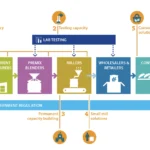
Testing is part of a broader quality system comprising contributions from industry, government and testing solution providers. The World Health Organization (WHO) distinguishes Quality Assurance (QA) and Quality Control (QC) in fortification [4]:
- Quality Assurance (QA) is preventive. It embeds checks into production, such as sourcing premix from certified suppliers, verifying feeder equipment, dosing premix correctly, and storing ingredients properly. These steps help ensure that foods are fortified correctly by design.
- Quality Control (QC) is detective. It involves sampling of flour, oil, or other fortified foods and testing them against standards to confirm nutrient levels fall within the allowable range [4].

WHO sets out four levels of monitoring for the contributions of the Government’s role in testing fortified foods [4]:
- Internal monitoring: QA/QC inside mills, to be carried out by manufacturers.
- External monitoring: Government audits and inspections at production sites.
- Import monitoring: Checks at borders to ensure fortified foods and premixes meet standards.
- Commercial monitoring: Market and retail checks to see what consumers receive.
Industry’s role includes food processors who are expected to document premix purchases, link them to production output, maintain inventories, calibrate feeders, and test finished products internally. This prevents costly failures and reinforces consistency [4].
This layered approach ensures that fortified foods remain compliant from production to the consumer’s plate.
Why does this matter? Robust QA/QC reduces waste and saves money. Detecting errors early avoids expensive recalls or enforcement actions. Importantly, it creates trust: governments can assure citizens that fortified foods are safe, and donors can be confident their investments are well spent.
Testing service providers supplement these systems by offering audits, certifications, and third-party testing to both regulators and industry, bridging gaps in national infrastructure [2].
Importance of Quality Testing in Food Fortification
Accurate testing is the backbone of compliance. Without it, fortification programs risk being ineffective. Testing brings several benefits:
- Protects public health: Ensures nutrient levels are within safe and effective ranges.
- Enables timely corrections: QA-driven monitoring allows producers to fix errors before large volumes are lost.
- Strengthens trust: Reliable testing reassures consumers and donors, preventing loss of confidence.
- Improves efficiency: Better monitoring means programs can be adjusted in real time, saving costs in the long run.
Where monitoring is weak, compliance lags. Globally, fewer than one in seven fortification programs achieve compliance above 80% [1]. This shows that testing is central to achieving health outcomes.
Testing Methods: Traditional vs. iCheck
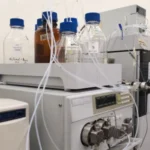
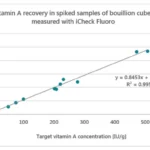
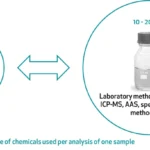
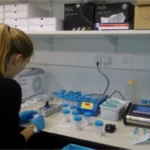
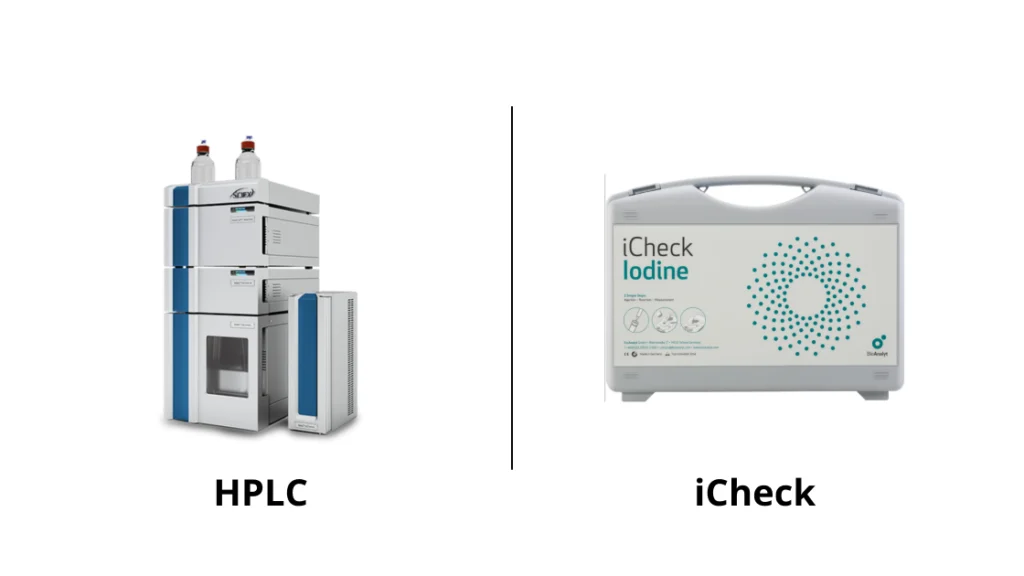
- Traditional Laboratory Methods, such as High-performance liquid chromatography (HPLC) for vitamin A and atomic absorption spectroscopy/ICP-OES for iron, are accurate and versatile. They can test for multiple nutrients at once and are essential for reference analysis. But they are expensive, costing around €50–100 per test and require advanced labs, trained staff, solvents, and reliable electricity. Setup and calibration can take months, limiting their use in decentralized contexts [5–7].
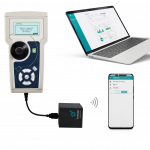
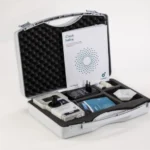
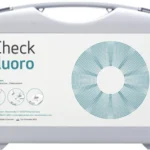
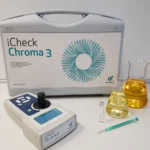
- In contrast, iCheck offers an efficient yet affordable alternative. It uses high-quality reagents and a portable reader to deliver results in minutes [6–8]. Training takes one day, and the infrastructure required is minimal.
Direct Comparison
| Feature | Traditional Laboratory Methods (HPLC, AAS/ICP-OES etc.) | iCheck Portable Devices |
| Accuracy | Very high; gold standard; multi-nutrient capable | High for selected nutrients (vitamin A, iron, carotene, iodine, zinc) |
| Time per test | Days to weeks (sample transport, analysis, reporting) | 10–30 minutes (on-site) |
| Cost per test | €50–100 [5–7] | €3.5–5 [6–8] |
| Equipment cost | €50,000–100,000+ (lab setup, maintenance, solvents, trained staff) | €3,000 (iron, carotene) to €8,500 (vitamin A) [5–8] |
| Training required | Months to years (chemistry, lab QA/QC) | 1 day [6–8] |
| Infrastructure | Full lab (electricity, reagents, waste disposal, skilled personnel) | Minimal (handheld reader, reagent vials, basic training) |
| Best suited for | Reference testing, regulatory validation, multi-nutrient analysis | Routine monitoring, decentralized checks, rapid QA/QC |
Cost Comparison & Geographic Variations
Testing costs in fortification programs vary widely, shaped by method, infrastructure, and geography. Traditional laboratory approaches demand expensive equipment, chemicals, and highly trained staff, while portable devices like iCheck reduce many of these inputs by using simpler hardware and ready-to-use reagents [2,3,5–8].
Infrastructure is a major cost driver. Laboratories require stable electricity, chemical supply chains, and waste management systems, difficult and costly to sustain in low-resource settings. Portable methods, by contrast, need minimal infrastructure and short training, making them easier to scale. Geography adds further pressure: import duties can raise equipment prices by up to 30%, and logistics and local training availability influence overall budgets [3].
Where portable testing is used, programs can expand monitoring within the same budget. For example, testing vitamin A with HPLC costs around €200,000 annually for 2,000 samples, compared to €18,500 using iCheck [7,8]. Similar savings are reported for iron (€90,000 saved) and carotene (~€187,000 saved) [5–7]. More broadly, BioAnalyt estimates 50–70% cost reductions when iCheck replaces traditional laboratory services in coverage surveys [2,3].
In short, laboratories remain indispensable for reference and regulatory testing, but portable devices lower costs, shorten turnaround times, and enable more frequent and geographically diverse monitoring particularly in settings with limited infrastructure.
Testing for Lasting Impact
Quality testing is essential for fortification programs to succeed. Without it, laws and standards remain unenforced, deficiencies persist, and public trust is undermined.
Traditional laboratories remain vital for reference testing and complex nutrient analysis, but their cost and infrastructure needs limit widespread application. Portable tools like iCheck are not a replacement but a complement, enabling rapid, affordable, and decentralized monitoring that strengthens QA/QC systems.
By combining policy support, robust QA/QC frameworks, and rapid testing technologies, fortification programs can improve compliance, strengthen monitoring, and achieve better health outcomes, ensuring that fortification delivers its intended benefits.
References
- Hystra. Large-Scale Food Fortification: Building the Business Case for the Private Sector. 2025.
- Internal document. BioAnalyt. Food Fortification Program Implementation & Monitoring Costs (PDF). May 2016.
- Internal document. BioAnalyt. Food Fortification Program Implementation & Monitoring Costs (PPTX). May 2016.
- World Health Organization. Monitoring Flour Fortification to Maximize Health Benefits: A Manual for Millers, Regulators, and Programme Managers. 2021.
- Internal document. BioAnalyt. Carotene: Cost Savings with iCheck (Research brief). Nov 2015.
- Internal document. BioAnalyt. Iron: Cost Savings with iCheck (QC/Research briefs). Nov 2015.
- Internal document. BioAnalyt. Vitamin A: Cost Savings with iCheck (QC brief). Nov 2015.
- Internal document. BioAnalyt. Vitamin A: Cost Savings with iCheck (Research brief). Nov 2015.